Quick answer
A pharmacy assistant on WhatsApp answers stock, price, pack size, delivery area, fee and cash-on-delivery rules from the catalogue you paste in, reads a photo of an empty box to match the product, and logs orders to a Google Sheet. It gives no medical advice: dosage, symptoms, interactions and prescriptions go to the pharmacist.
- The no-advice rule sits at the top of the prompt: no dosage, no substitutions, ever.
- Box photos become product matches; unreadable ones get a request to type the name.
- Voice notes are transcribed and answered in the same language they arrived in.
- Orders become a dispatch list: name, phone, items, address, collection or delivery.
At a glance
It answers
- Stock and prices
- Opening hours and branches
- Delivery and pickup
- Prescription requirements
It hands to you
- Dosage and medical advice
- Prescription checks
- Adverse reactions
10 min
to set up
New chats
only, by default
Any
language
Pharmacy
answered by Replai, after hours
- Do you have blood pressure monitors? How much is the Omron?21:14
- Omron HEM-7156 is in stock at $65. Pick up today until 10pm, or delivery within the city for $4. Which one?21:14
- Can I get my blood pressure tablets without a prescription?21:16
- That needs our pharmacist, so I'm passing it over now. Can you share the medicine name and your number?21:16
Illustrative exchange. Your bot answers from your own prices, hours and rules.
A community pharmacy's WhatsApp is half enquiries and half photographs. Someone's mother needs the same insulin pen needles as last time and sends a picture of the empty box. A caregiver asks whether you have a nebuliser mask for a child, and can it be delivered tonight. A regular sends a voice note, because typing is hard, asking if the glucose strips are in.
Why do pharmacy messages pile up?
The format is part of the problem. WhatsApp users send about 7 billion voice messages a day on average (WhatsApp, 2022), and a neighbourhood pharmacy gets its share: a regular asking whether the glucose strips are in, recorded rather than typed. A saved reply cannot answer that. Something that transcribes the note and answers in the same language can.
Every one of those messages is a sale, and every one needs a person to stop what they're doing, read the photo, walk to the shelf, check the price, and type a reply. During a busy counter session the phone waits. After closing it waits until morning, and the caregiver who needed the mask tonight has found a 24-hour outlet instead.
The questions are repetitive: do you have it, how much, can you deliver, is cash on delivery okay, what time do you close. The hard part is that they arrive as photos, voice notes and three-language messages, not as neat text you can answer with a saved reply.
What can a WhatsApp bot handle for a pharmacy?
Replai pairs to your pharmacy's existing WhatsApp number and answers the stock, price and delivery questions from the catalogue and rules you give it: your product list with prices and pack sizes, your delivery areas and fees, your cash-on-delivery rules, and your opening hours.
When a customer sends a photo of a box, the bot reads the product name and pack size off it and matches it to your catalogue, then quotes the price and asks whether they want it delivered or collected. When they send a photo of a printed prescription, it reads the item names to tell them what you stock, then passes the thread to the pharmacist. It does not confirm a prescription sale on its own, and it does not suggest a substitute.
Voice notes are transcribed, in whatever language they arrive in, and answered in that language. English, Malay, Mandarin and Tamil in the same afternoon is normal for a neighbourhood pharmacy in a mixed city, and normal for the bot.
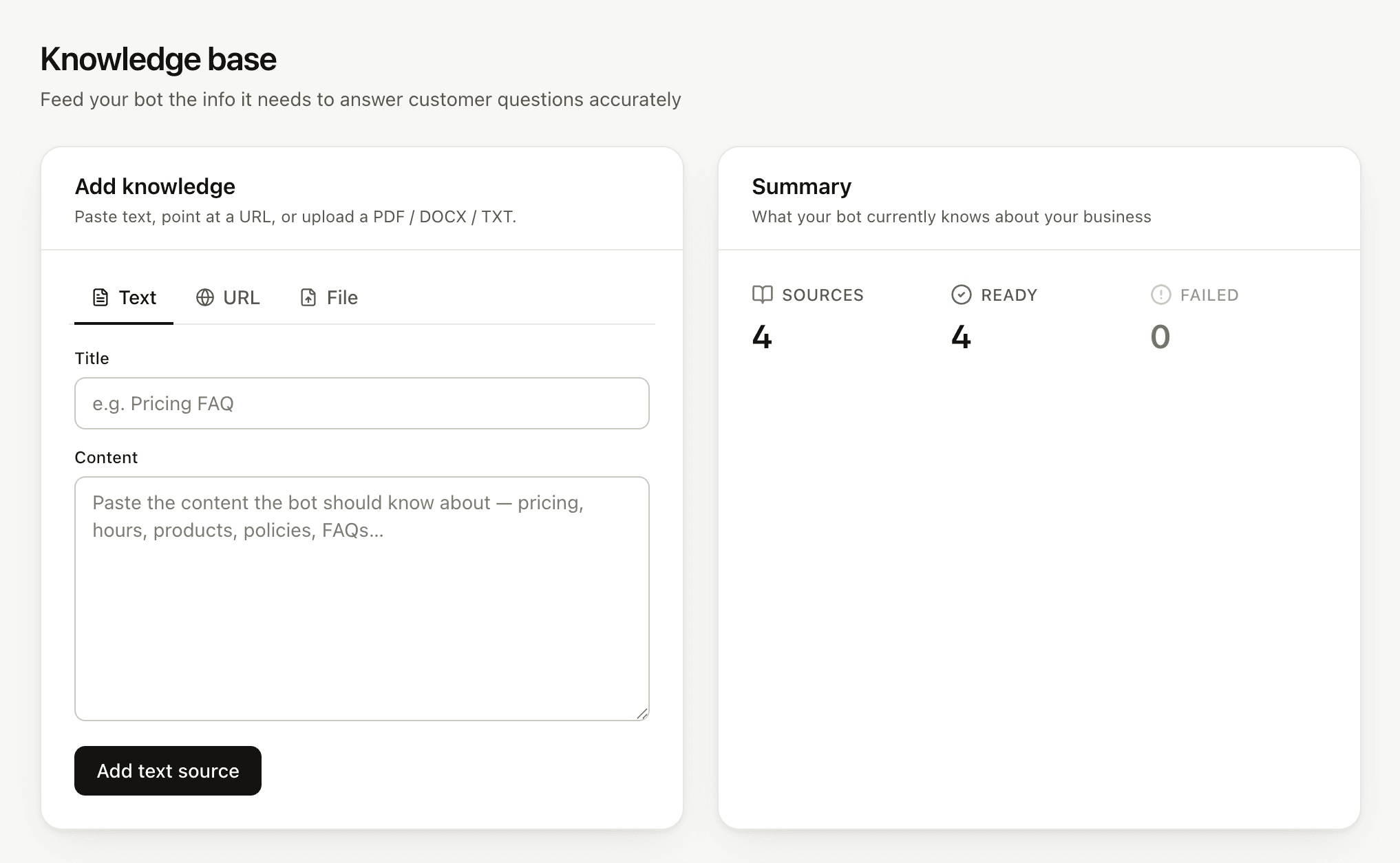
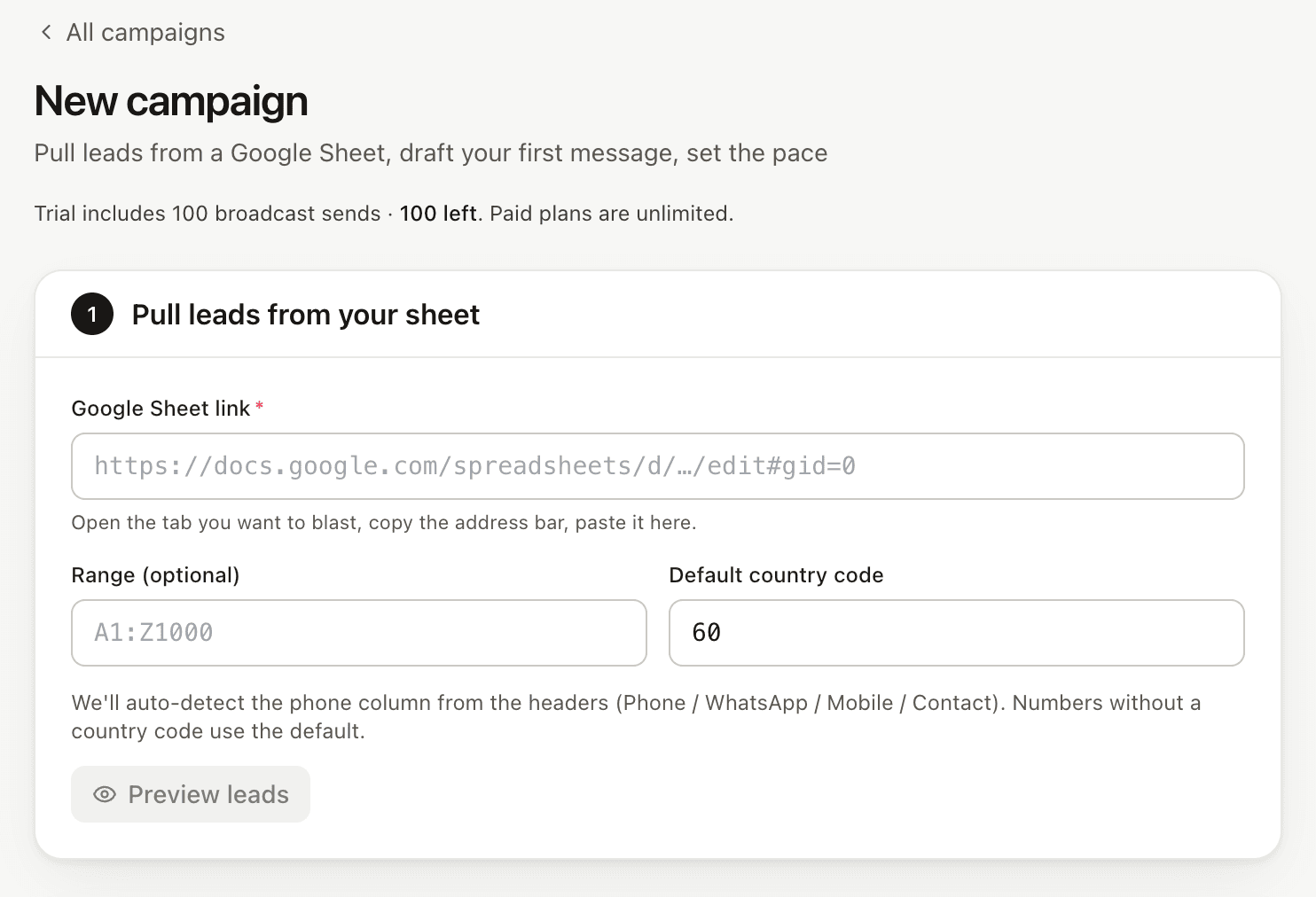
Once a customer says yes, the bot asks for a name, a phone number and a delivery address, and logs the order to your Google Sheet. You send the payment QR image into the thread from the dashboard, or confirm COD, and dispatch from the sheet.
The rule that doesn't move
The bot gives no medical advice. Not dosage, not "can I take this with my blood pressure medicine", not "which one is better for my father". It can describe what's in the catalogue: an upper-arm monitor versus a wrist one, the strip count in a box, the mask sizes you stock. Anything about a person's health goes to the pharmacist, with one line: "our pharmacist will answer that, can I take your number so they can call you back?" Write that at the top of the prompt and it holds.
What you get
- Stock and price answers from your catalogue. Insulin pen needles by gauge and length, blood pressure monitors by cuff type, glucose strips by brand and count, nebuliser masks by size. The bot quotes what you wrote down. It doesn't read your POS, so keep the list current and tell it which lines to answer with "usually in stock, we'll confirm before you come".
- Photos read, not guessed. A box photo becomes a product match. A printed prescription becomes a stock check and a handover to the pharmacist. Anything unreadable gets a polite "could you type the name for me". Reading images and transcribing voice notes are included on every plan, Starter upwards; the Pro plan adds replies spoken back as a voice note.
- Delivery and COD rules applied consistently. Which areas, what fee, minimum order, cut-off time for same-day, COD only within a certain distance or above a certain amount. Rules you'd otherwise retype forty times a week.
- Voice notes from older customers. Transcribed and answered in the same language, so the customers who find typing hard get the same service as everyone else.
- Orders in a sheet. Name, phone, items, address, delivery or collection, payment method. Your dispatch list writes itself during the day.
- Human takeover. Pharmacist questions, complaints and anything the bot is unsure about are flagged to the dashboard. You take the thread over, the bot pauses on it, and you hand it back when you're done.
One honest note: the bot is not a substitute for the pharmacist's judgement and it is not for emergencies. If someone describes a reaction or a symptom, the right reply is the emergency number and a human, and that rule belongs in the prompt beside the no-advice rule.
Set up in 5 minutes
Pair your pharmacy's WhatsApp number by scanning a QR. Pick the online store template. Paste in your catalogue as text or a PDF, your delivery and COD rules, and your hours. Put the no-medical-advice rule and the pharmacist handover at the top of the prompt. Connect a Google Sheet for orders. Then send it a box photo from your own phone and see it quote the right price.
The 7-day trial at replai.pm needs no card and includes ten conversations, enough to run a full day of real enquiries before you decide.
Related
- WhatsApp appointment booking for clinics in Malaysia
- WhatsApp for dental clinics
- WhatsApp customer service for your online store
- Running a health helpline on WhatsApp
Want this on your number?
7-day free trial — no credit card, no API key.
Frequently asked questions
Can a WhatsApp bot answer stock and price questions for a pharmacy?
- Yes, from your catalogue. Paste or upload the product list with prices and delivery rules and the bot answers from it, including when a customer sends a photo of a box or a voice note naming the product. If an item is not listed it says so rather than guessing.
Will it give medical advice?
- No. The system prompt tells it to answer only product, price, stock and delivery questions from your knowledge base and to hand any question about dosage, symptoms or interactions to a pharmacist. That line is the whole point of using it in a pharmacy.
Will it reply to my existing customers when I pair the number?
- No. New accounts answer new conversations only: chats already on the phone when you pair stay with you, and only people who message for the first time get the AI. You can release a single old thread to the bot or switch to answering everyone in Settings, and take any conversation back by replying yourself.
What does it cost?
- On Replai the Starter plan is $19 a month for one WhatsApp number and 120 conversations a cycle, where a conversation is one customer thread of up to five bot replies; Growth is $49 for up to three numbers, 300 conversations and campaigns. The AI is included, there are no per-message fees because it pairs to your existing number, and the 7-day trial needs no card.
Sources
- About WhatsApp, WhatsApp, 2026-09-07
- Making voice messages better, WhatsApp blog, 2022-03-30
- Lead Response Management Study, InsideSales.com and MIT, 2007